If
you’re used to driving in the UK – or
any country that drives on the left
– chances are you won’t have many problems
driving in Australia. But like anywhere,
it pays to know about the local rules
and road signs before you get behind
the wheel.
Sydney
the home of the 2000 Summer Olympic
Games  Home of 2023 Women's
World Cup football,
Home of 2023 Women's
World Cup football,
Key rules, regulations and things to
know
Drive
on the left,
overtake
on the right. If
you’ve got more than one lane to choose
from the remain in the lane on the left
nearest the curb unless you’re overtaking.
Australia
is a huge country (continent) and distances
between most cities are very long. As
in the USA
for example
it is often a lot more convenient to
take a plane or even a train than drive.
 Drink
and Driving:
Random breath testing is common and
penalties for driving over the limit
are heavy, so it is better to avoid
alcohol completely if you’re driving.
Limit is 0.02
- 0.05 More
information Here
Drink
and Driving:
Random breath testing is common and
penalties for driving over the limit
are heavy, so it is better to avoid
alcohol completely if you’re driving.
Limit is 0.02
- 0.05 More
information Here
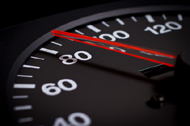 Speed Limits: All
speeds and distance are in km/h.
Be
aware of changing speed limits. Many
urban areas in Australia now impose
limits of 50km/h
(30mph) per hour in residential areas,
with lower limits of 25km/h
to 40km/h
per hour around schools and other areas
at certain times of day. Signage should
tell you what the limits are and when
they apply. To view varios speed limits
summary Click
Here There are differences between
the states and links to individual websites
can be found Here
Speed Limits: All
speeds and distance are in km/h.
Be
aware of changing speed limits. Many
urban areas in Australia now impose
limits of 50km/h
(30mph) per hour in residential areas,
with lower limits of 25km/h
to 40km/h
per hour around schools and other areas
at certain times of day. Signage should
tell you what the limits are and when
they apply. To view varios speed limits
summary Click
Here There are differences between
the states and links to individual websites
can be found Here
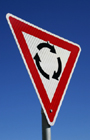 Give way to the right at
roundabouts and intersections.
Exceptions apply if road signs or traffic
lights tell you otherwise, or other
drivers have been pulled up by a
Give way to the right at
roundabouts and intersections.
Exceptions apply if road signs or traffic
lights tell you otherwise, or other
drivers have been pulled up by a  STOP
or GIVE WAY sign when you haven’t.
STOP
or GIVE WAY sign when you haven’t.
 Mobile
phones: These must not be used
while you are driving unless it is a
hands free model fitted to the dashboard
or similar area of the vehicle. Don't
risk using one as you can receive a
heavy fine in most countries and more
important cause a serious accident.
Mobile
phones: These must not be used
while you are driving unless it is a
hands free model fitted to the dashboard
or similar area of the vehicle. Don't
risk using one as you can receive a
heavy fine in most countries and more
important cause a serious accident.
Don’t
beep your horn
unless you’re warning other drivers
of imminent danger.
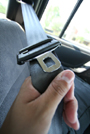 Seat belts
must be worn by the driver and all passengers
at all times. And if you’re travelling
with a baby or young child, make sure
they’re travelling in an approved car
or booster seat.
Seat belts
must be worn by the driver and all passengers
at all times. And if you’re travelling
with a baby or young child, make sure
they’re travelling in an approved car
or booster seat.
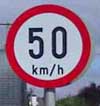 Speeds and distances on road signs appear
in kilometres. Not miles.
Speeds and distances on road signs appear
in kilometres. Not miles.
Pedestrians
at marked crossings have right of way.
Driving over a pedestrian crossing if
people are already on it or waiting
to cross is illegal.
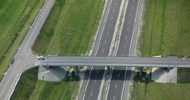 Check payment methods for toll roads
in advance. Some Australian toll roads
no longer accept cash payments. Instead,
you’ll need an e-Tag (an encoded magnetic
card) or a temporary e-Pass registration
to pay. Ask your rental company for
advice when you pick up your car, or
check
the links
below to see how tolls apply
to your planned routes.
Check payment methods for toll roads
in advance. Some Australian toll roads
no longer accept cash payments. Instead,
you’ll need an e-Tag (an encoded magnetic
card) or a temporary e-Pass registration
to pay. Ask your rental company for
advice when you pick up your car, or
check
the links
below to see how tolls apply
to your planned routes.
If
the centre line on your side of the
road is yellow and unbroken, you can’t
overtake. It’s illegal (and usually
dangerous) to do so.
You must come to a complete stop at
a STOP sign.
If cars are coming, then you must give
way to them.
You
don’t have to come to a complete stop
at a GIVE WAY
sign if the coast is clear. But
you do have to slow down and check for
oncoming traffic before you proceed.
A NO STANDING
sign means exactly that. If you see
this sign, you can stop briefly to let
passengers in and out of your car, but
that’s it.
NO
STOPPING
signs also mean exactly that. Exceptions
apply only if you’re dealing with a
medical emergency.
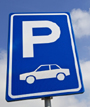 Make sure you park on the left, so that
you’re not facing traffic. You can’t
park where signs say LOADING
ZONE, unless you’re collecting
or picking up some kind of cargo. Large
vehicles are generally
free to do this without question, but
you may be asked to explain yourself
if you’re in a normal passenger car.
Make sure you park on the left, so that
you’re not facing traffic. You can’t
park where signs say LOADING
ZONE, unless you’re collecting
or picking up some kind of cargo. Large
vehicles are generally
free to do this without question, but
you may be asked to explain yourself
if you’re in a normal passenger car.
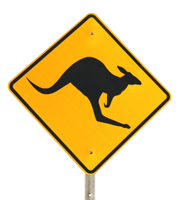 Watch out for wildlife. Wombats, koalas
and kangaroos
are just a few of the native and farm
animals that are known to cross roadways
throughout the country. Signage will
generally indicate what you need to
look out for where.
Watch out for wildlife. Wombats, koalas
and kangaroos
are just a few of the native and farm
animals that are known to cross roadways
throughout the country. Signage will
generally indicate what you need to
look out for where.
 The Australian Automobile Association
(AAA) - Click on the image above to
enter site
The Australian Automobile Association
(AAA) - Click on the image above to
enter site
Smoking
in cars: From
1st October 2015 drivers in England
and Wales will be banned from smoking
in cars carrying children under the
age of 18. The law aims to protect young
people under 18 from second-hand smoke.
Similar bans are already in place in
the United States, Canada and Australia.
Main
Source: Insurance4carhire.com
Back
to top
 Information from holiday autos about
Australia
Information from holiday autos about
Australia
The
land Down Under. Home to Vegemite, surfing
and kangaroos. Alright, there’s much
more to Australia than that. It’s awesome
mate. Book cheap car hire in Australia
and find out for yourself. Australia
car hire couldn't be easier; wherever
you fly in to, there’ll be a car waiting
for you.
car
hire in Adelaide It’s
hot. Really hot. The best idea is to
book car hire and head straight for
the coast. Escape the heat and head
to Coober Pedy. It’s a whole town underground.
It’s also famous for it’s Opals. If
you’re feeling adventurous head to the
Flinders Ranges. Try your hand at rock
climbing, a four-wheel drive or just
snap away at the jaw-dropping structures.
car
hire in Melbourne
Four seasons in
one day. It may be crowded in the city
but that’s no reason to stay in. Book
cheap car hire and see the sights instead.
There’s no better scenic drive than
the Great Ocean Road. It’s a pretty
long stretch but just think of all the
photo opportunities. Had enough of pretty
pictures? Drive down to St Kilda for
some fun at the fairground.
car
hire in Sydney Tops
the charts as number one Aussie destination
for us Brits. We love it. Australia
car hire is the best way to see it for
yourself. Surfing is a must for any
visit to Sydney. Book cheap car hire
and hit the waves with the locals at
the famous Bondi Beach. Scared of big
waves? Try climbing the Harbour Bridge
instead. They’ll look smaller from up
there. Also, you get to wear a pretty
smooth jumpsuit.
car
hire in Brisbane Brisbane
– home to a place called Funny Dunny.
Pop on your sunnies,
book cheap car hire and explore at your
leisure. Take the hire car down to Moreton
Bay. Watch whales migrate, go for a
kayak or tackle the world’s tallest
sand dune (not in your hire car). After
all that action, with Australia car
hire you can sit back and relax in Byron
Bay. Head to the lighthouse, it’s Australia’s
most easterly point. Fair dinkum.
car
hire in Cairns Australia’s
tropical playground. Jet-skiing around
shark-infested Magnetic Island is a
must but hire a car and explore further
a field. Head to Airlie Beach and catch
a sail boat out to the Whitsunday Islands.
Swap your driving specs for a snorkel
on the Great Barrier Reef. Book Australia
car hire and drive south for a spot
of turtle watching. It’s more impressive
than it sounds. There’s also a rum distillery
if it helps?
car
hire in Perth After
a bit of space? Western Australia has
over one million square miles of it.
Perth is the perfect base to find cheap
car hire Australia and go exploring.
Swap you’re hire car for a kite surf
down at Cottesloe or Scarborough. Just
make sure you have a lesson first. If
the wallet’s feeling a bit light, book
car rental and drive to Kalgoorlie for
a spot of gold panning.
top
driving tips
-
Unlike most Australian states, you can’t
do a u-turn at traffic lights in Adelaide.
Watch
out for people getting of the trams
in Melbourne city centre.
If
you’re driving into Sydney city get
in the right lane at the toll booths.
You don’t want to end up going through
a tunnel and not over one of the most
famous bridges in the world. Disaster
Australia’s
roads are very straight. Take a rest
every couple of hours.
Cairns’s
kangaroo suicide rate is high. Watch
out for any about to jump in front of
you.
Capital:
Canberra
Telephone
Country Code: +
61

More
Information
 Rules & regulations - New South
wales Government
Rules & regulations - New South
wales Government
 Northern Territory Road Users' Handbook
 Licensing -Department of Transport &
Main Roads - Queensland
Licensing -Department of Transport &
Main Roads - Queensland
 Driving
in South Australia
Driving
in South Australia
 Tasmanian
Road Rules
Tasmanian
Road Rules
 Government
of Western Australia - Motoring
Government
of Western Australia - Motoring
 Victoria
Road Rules
Victoria
Road Rules
Rules
and regulations can change by state.
See
more links below for specific
information.
Back
to top
Drink Drive Laws - Examples
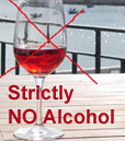
of what can be drunk at present
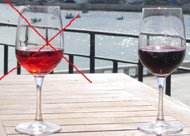
It
is not a lot and in some countries
even to drink the glass on the
right would be breaking the
law if you drove afterwards
in others a sip would be too
much see
"Wine"
below
 "Wine
- even
a sip will send you over the
limit and invalidate your insurance
in Parkistan, Cuba, Indonesia,
Romania, Jordan and Nigeria,
according to Rhinocarhire.com
which produces a comprehensive
guide." The
A to Z of car hire - The Independent
- August 2010
"Wine
- even
a sip will send you over the
limit and invalidate your insurance
in Parkistan, Cuba, Indonesia,
Romania, Jordan and Nigeria,
according to Rhinocarhire.com
which produces a comprehensive
guide." The
A to Z of car hire - The Independent
- August 2010
See
this guide for further information
Back
to top
Further
Information:
The
following websites are provided by the
various Australian state governments,
and feature comprehensive information
about road rules, tolls and traffic
conditions. Some are aimed more at learner
drivers, while others (such as the NSW,
Victorian and Queensland sites) have
specific sections designed for tourists.
Roads
and Traffic Authority, NSW
VicRoads
(Victoria)
Queensland
Transport: Driving with a foreign licence
Road
Safety (South Australia)
Northern
Territory Road Users’ Handbook
Major
road rules, Western Australia (PDF)
ACT
Road Rules Handbook
Tasmanian
Road Rules
Finally,
Don’t forget your car hire excess insurance
and buy it before you set off
_____________________________________________












 Driving in
Austria
Driving in
Austria Driving in
Belgium
Driving in
Belgium Driving in
Bulgaria
Driving in
Bulgaria Driving in Canada
 Driving in
Cyprus
Driving in
Cyprus Driving in
The Czech Republic
Driving in
The Czech Republic Driving in
Denmark
Driving in
Denmark Driving in England
 Driving in Finland
 Driving in
France and Corscia
Driving in
France and Corscia Driving in Germany
 Driving in
Greece and the Greek Islands
Driving in
Greece and the Greek Islands Driving in Holland
 Driving in
Hungary
Driving in
Hungary Driving in
Iceland
Driving in
Iceland Driving in Ireland
 Driving in Italy Sardinia
and Sicily
Driving in Italy Sardinia
and Sicily


 Driving in
Luxembourg
Driving in
Luxembourg Driving in Malta and Gozo
 Driving in Monaco
 Driving in Northern Ireland
 Driving in
Poland
Driving in
Poland Driving in Portugal
 Driving in Scotland

 Driving in Spain The
Balearrics and The
Canary Islands
Driving in Spain The
Balearrics and The
Canary Islands Driving in Sweden
 Driving in Switzerland
 Driving
in United Arab Emirates
UAE
Driving
in United Arab Emirates
UAE Driving in The UK - England
- Scotland - Wales &
Northern Ireland
Driving in The UK - England
- Scotland - Wales &
Northern Ireland
 Driving in Wales